
Quintino's Chicken
Arthur Antunes Coimbra, better known as Zico, is the greatest idol in the history of Flamengo and those who followed his career closely guarantee that he is one of the greatest players in the history of not only Brazilian football. The brilliant midfielder was also a goalscorer. He also had a career in Europe and Asia, but his peak was at his home, Maracanã.
Mário Filho, of course, was not always Zico's house. The skinny boy started playing in his neighborhood, Quintino, also in the North Zone of Rio de Janeiro. Football was in his family's blood, as his brothers also played. Edu even had a solid career in football in Rio de Janeiro, being an idol for América.
Trying to follow in his older brother's footsteps, Zico started playing futsal. Until one day, playing for River in the region, he caught the attention of Celso Garcia, a radio host at the time and who had friendship ties with the young man's family. The journalist then took Zico to Gávea.
"I played futsal in an internal championship of a team, River. There was the internal championship on Sundays, from a man who rented a court there. I played in one of the teams and it was there that Celso Garcia went to see me, he liked it and I took him to do a test at Flamengo", recalled Zico, in an interview with Gol .
In addition to futsal, which gave him "speed of reasoning, speed of finishing, short dribbling and the spike kick", Zico kept another important lesson from childhood that made all the difference in his career. Zico learned to be a perfectionist from his father, Seu Antunes, in the family tailor shop.
"My father was a tailor who didn't like customers complaining about his clothes. If he had to try on a suit, pants or jacket once, twice, five, ten times, he would try it on. And the assistant who worked with him, he said: 'But Seu Antunes, it's already good, it's ready'. He said: 'No, I don't like customers to come back here and bring the suits to be repaired'. This is called perfectionism. And I learned from him. And really, the whole period I lived there, I didn't see any customer complain about the suit he made. That was really cool and I took it to football".
thin chicken
Zico arrived in Gávea at the age of 14. He was small and very thin. Flamengo feared that the boy might have problems adapting to professional football. Since he was young, Zico underwent treatment to gain muscle mass. He suffered in the early years.
Only when he proved stronger did he become part of the team. The debut in official matches took place on July 29, 1971, in the former Guanabara Cup, which at the time was not yet part of Carioca. Flamengo beat rival Vasco by 2 to 1. On August 7, 1971, the star debuted in the Brazilian. On Ilha do Retiro, Flamengo lost to Sport. Zico finished that year with 17 appearances and two goals.
The following year, Zico didn't have as much space with Zagallo. He only played eight official games in 1972, as Velho Lobo thought the midfielder had been released early. Galinho ended up being left out of the Olympics that year for having entered the field little.
The beginning of titles and goals
It was not until 1973 that things started to improve for Zico. The young man, despite not yet being an undisputed starter, was getting more space in the team. He won the Guanabara Cup, despite not being champion of Rio de Janeiro (Flu won the decision), and played 35 times, scoring eight goals. He scored for the first time in official classics (one against Vasco, another against Botafogo).
But the turning point for Zico was 1974. That year, Galinho wore the number 10 red-black shirt for the first time, never to let go. At that time, the calendar started with the Brazilian Championship and ended with the Carioca. In the Brazilian, Zico was already a blast.
Although the champion was Vasco, Zico was elected the best midfielder and the best player in that championship. The midfielder, now with 10, also started to stand out for his goals. He even had a streak of four straight games scoring. He added 12 goals in 19 games.
In Carioca, Zico was also the best player and Flamengo was the best, winning the competition. In 27 games, the midfielder scored 19 times. He began, there, to write a huge history of goalscoring and also of titles with that shirt.
"1974 was the year I was made permanent in the first team, mainly by that coach who knew me from the base, Joubert. Zagallo left at the end of 1973 to go to the selection for the World Cup. Joubert already put me in the starting lineup in the first friendly and I never lost my position again. I started scoring goals and then the others went to fight for their position. The starter was Doval, who was an idol, and I won his position, and he went to play 9, and Dario Dadá Maravilha ended up being a substitute. Then Doval got injured and Dario gained the position of center forward, it was me and Dario", recalled Zico.
decisive scorer
The numbers would only increase in the following seasons. In 1975, despite Fla not having won titles, Zico was again elected one of the best in the Brazilian and also stood out in Carioca. There were 40 goals in 56 official games. The average in Carioca, for example, was more than one goal per game (30 goals in 29 games).
Despite hearing boos from the Red-Black crowd for missing a penalty in the Guanabara Cup final, 1976 was marked in Zico's career as the year of his first game for the national team. In February 1976, Galinho scored on his debut, against Uruguay, and also left the mark against Argentina, in the following friendly, both with a 2-1 victory.
The first Chicken Cup
Zico did not take long to convince him that he would have to be a constant presence in the Brazilian national team. So much so that he ended up among those chosen to play in the 1978 World Cup in Argentina. The so controversial and remarkable Cup in Argentina.
Brazil had, side by side, the great Flamengo idol, Zico, and the great Vasco idol, Roberto Dinamite. The team was brilliant, with Toninho Cerezo, Batista, Dirceu, Rivellino, Reinaldo... The campaign was also going well.
Zico was in the starting line-up in the first two games of the Cup, but he only scored when he came off the bench, against Peru. The Brazilians scored 3-0 against the Peruvians, who ended up taking an inexplicable thrashing of Argentina, which advanced to the final with the score. Zico and company ended up finishing third, beating Italy. Brazil ended that Cup undefeated, but was eliminated by the rout of Argentina over Peru, by 6 to 0, in one of the most disputed games in the history of the Cups.
"Something different than normal happened. Losing, everyone can lose. But not the way Peru lost. For us, it was very bad and we deeply regret that it happened at a World Cup. It should never happen, but at a World Cup, mainly", said Galinho.
Never seen so many goals
1979 was Zico's big year in terms of goals. The midfielder commanded Fla's Carioca title with an incredible 60 goals in 43 tournament games. In all that season, there were 65 goals in 51 official games, with an average of 1.27 goals/game, the best in Galinho's career.
In 1980, Zico saved the goals for the Brazilian Championship, adding 21 goals in 19 matches. He even scored four against Itabaiana and three against Desportiva Ferroviária. In the semifinal, he was decisive, scoring the two of the victory over Coritiba, in the first leg.
The midfielder won his first Brazilian Championship with the red-black shirt against Atlético Mineiro, scoring one of the goals of that decision. The rivalry of a Flamengo team against another Atlético dream team would continue in the following years.
"There were two teams that formed the base of the 1982 team with Telê. Telê maintained the base of both teams. They were exceptional games, Flamengo x Atlético. This rivalry was created because they were the two teams, perhaps the best in Brazil at the time ", recalls Zico.
On top of the world
With the Brazilian title of 1980, Zico and Fla went to parade their category in Libertadores. The Gávea club had never won the tournament, but Zico should never be underestimated. Once again decisive, the midfielder carried that team in a historic campaign.
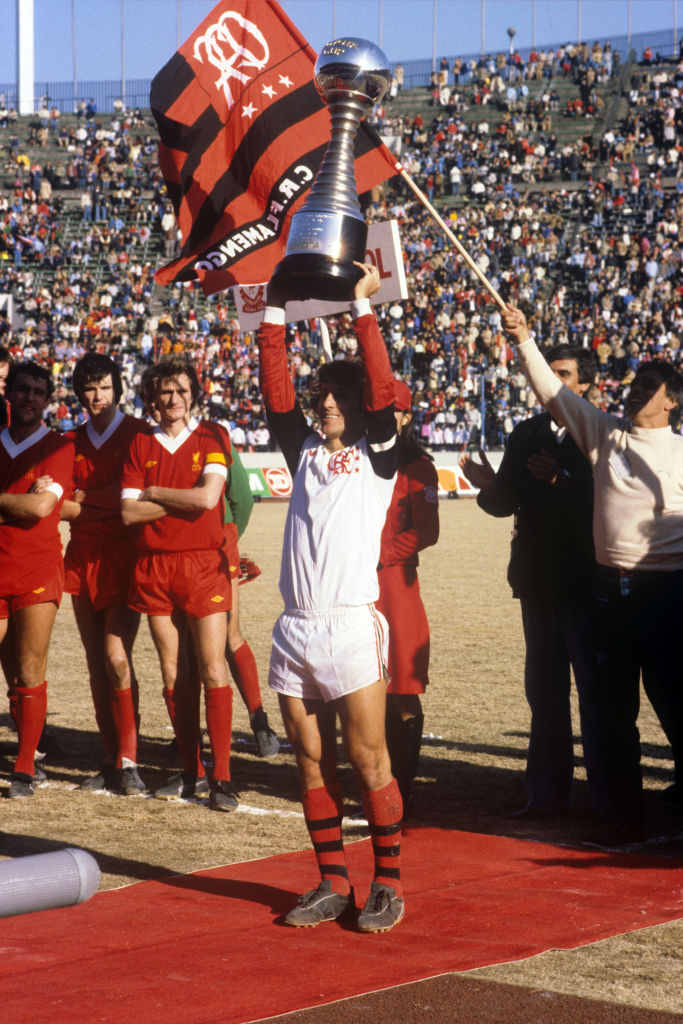
Rubro-Negro had already been champion of Rio de Janeiro when it started to challenge opponents in America. The campaign went through Atlético Mineiro, in a historic confrontation, and had the apex in battles against the Chileans of Cobreloa.
At Maracanã, victory in Rio, with two goals from Zico. In Chile, a lot of fighting and a Chilean triumph. The decision was left for a third game, to be played in Uruguay. Zico, once again, was the protagonist. The midfielder managed to get out of the Chilean violence and scored the two goals of the title, the second free-kick, his trademark. The midfielder was the top scorer in that Libertadores, with 11 goals.
Also in 1981, the champion of America became champion of the world. Flamengo applied a ball in the final of the World Cup against Liverpool, making 3 to 0 and consecrating itself as one of the great teams that Brazilian football has ever seen. Zico guarantees that it was one of the great departures of that squadron.
"It was one of the great matches, and we went in with that same spirit. It was our last game, and we were very tired. We came from three decisive games against Vasco, in Carioca. Then the game ended, on the same day or another, already We traveled. We stayed in Los Angeles for two, three days, to adapt a little to the time zone. And we went there. We had played six decisions in a month, three of Libertadores and three of Carioca, and there was only that one left. We said: 'Let's go with everything, give our best and try to decide it soon'. We were happy, we made it 3-0 in the first half and just let time pass. If it was in the middle of the season, those three would be increased in the second half", he recalled.
Disappointment in Sarriá
In 1982, Zico, who would be Brazilian champion with Fla once again, wanted to reach the top of the world with the Brazilian team. And he had reasons to dream, since the selection, commanded by Telê Santana, formed one of the great teams in the history of football.
The performances in the Cup in Spain enchanted the world. Beautiful football, with beautiful passes, dribbling and pure magic. Brazil went 4-1 over Scotland (Zico scored one) and 4-0 over New Zealand (two by Zico). Against Argentina, there was a duel between two of the most talented number 10s in history.
On the one hand, Diego Maradona was expelled. On the other hand, Zico opened the scoring and assisted Serginho Chulapa to confirm the Brazilian victory by 3-1. Everything was heading towards a title, until Italy appeared in the path of the Brazilians.
The Italy of experienced goalkeeper Dino Zoff. The Italy of Paolo Rossi, who became a Brazilian executioner. The Brazil that enchanted the world lost to Italy, by 3 to 2, in Sarriá, and said goodbye to the dream of a world title. Leandro, Oscar, Júnior, Sócrates, Zico, Cerezo, Falcão and company said goodbye to that brilliant Cup.
"There are teams that score even if they don't win, like Hungary in 1954, Holland in 1974 and ours. We have four players among the top 100 in FIFA: me, Júnior, Sócrates and Falcão. Usually the guys give these awards to those who win titles. So in that selection, almost everyone was successful. But winning or losing is part of it. I don't regret anything. Our coach's philosophy was that, we played the football he wanted for us to play," said Zico.
See you later with title
In 1983, Zico, then 30 years old, won the Brazilian again with Flamengo. He was decisive in the knockout stage, scoring against Vasco, in the quarterfinals, against Atlético Paranaense, in the semifinals, and in the decision, against Santos.
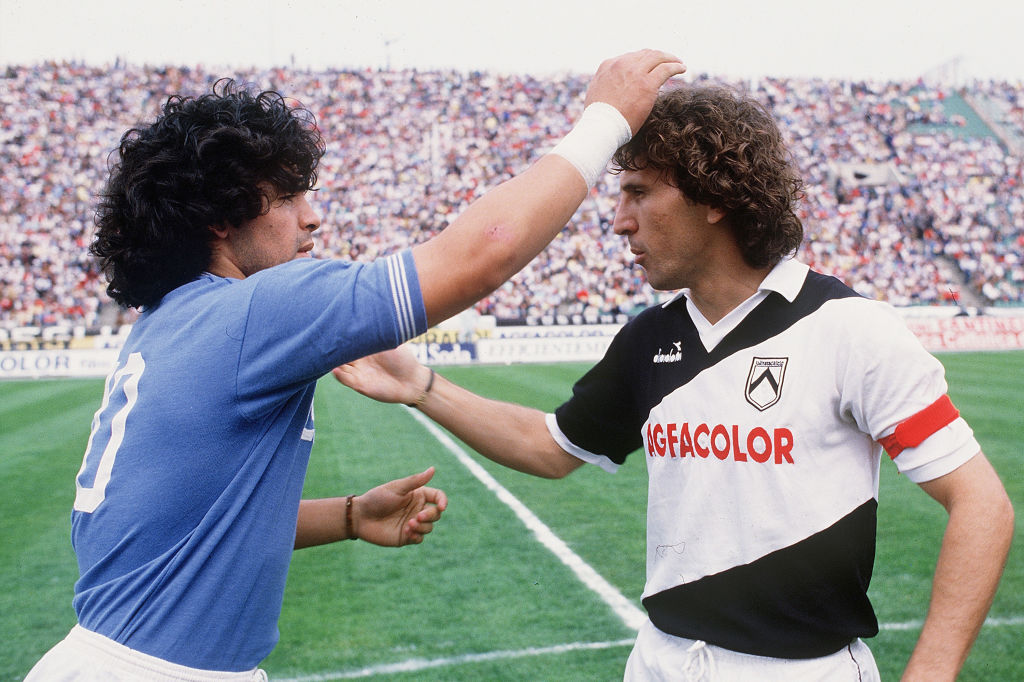
That title was a kind of "see you later" to the red-black fan. Zico then left the country to play for Udinese, in a transaction that shocked many at the time because Udine was not exactly the great center of Italian football.
Zico arrived in the city in the arms of the people, stopping the city, which treated him like a king. Inside the field, the midfielder tried to reciprocate. He was the star the team needed and, despite not being able to achieve the almost impossible mission of lifting cups there, he scored 19 goals in 24 games in the first Italian Championship. In artillery, he was second only to Michel Platini of Juventus.
"Udinese had a young team, but a very good one. With players who later stood out in Milan, Napoli, Rome, Juventus and went on to the national team. So it was a good, rewarding experience, which was worth experiencing", guaranteed Zico.
In the following season, however, Zico's problems began in Italy. The midfielder had problems with injuries on the field and, outside the four lines, he suffered from problems with the tax authorities. He ended up deciding to return to Brazil. And return where?
Return to Gávea and another Cup
Flamengo didn't have any financial condition to receive Zico, but it was bold. With an unprecedented marketing project, he managed, together with companies, to fund the return of his greatest idol, who would act as a kind of poster boy.
The main concerns of the Flemish board, however, ended up being confirmed. Zico suffered from physical problems and, in his first year back, made only six official appearances, with three goals. In 1986, there were only four matches.
Still, Zico went to another World Cup. In 1986, he returned to defend the Brazilian national team in Mexico, despite being aware that he was not physically well. And he met Michel Platini, an old rival in Italian football, in the quarterfinals of that Cup, against France.
The game ended in a 1-1 tie. Careca opened the scoring for the Brazilians, but Platini equalized. Zico had the chance of winning a penalty kick in the second half, but he didn't take advantage of it and Brazil ended up eliminated in penalty shootouts. It was the farewell of the Brazilian number 10 of Cups, with a certain melancholy.
"I paid for disobeying what my heart told me, which was not going to the World Cup. I was injured, I had to have surgery on my knee for a cruciate ligament injury, which was going to take me off the field for six months and almost a year play again. I had to do it, but the management convinced me that I was important for the selection".
Late Years and Idolatry in Japan
In 1987, Zico had glimpses of great moments. In the semifinal of the Brazilian Championship, he was inspired by the duel against his old rival, Atlético Mineiro, and scored in the victory in Belo Horizonte, by 3 to 2. In the end, he celebrated the title against Internacional.
Zico played for Fla until 1989. He is the best scorer in the club's history and, in official games, he scored 404 goals in 588 games. In the 1990s, he decided to have an experience in Japanese football, and helped in the professionalization of the sport in the country.
He became idol of Kashima Antlers. He was even able to grace the Japanese fans with brilliant shots. There were four seasons there, until Zico ended his career in 1994. He became such an idol in Japan that he started his coaching career at Kashima.
"The most important thing was to show them that they had to make football a profession. Professional football demands total dedication, daily. You cannot have a job at the company and go to train. Japan, at that moment, could not understand that. When I went there, in the second division, the team was practically made up of employees. The guys, to play, received, let's say, 100 reais. They worked, training had to be after four hours, when they left work. And no there is the possibility of being a professional that way. So I went there to show how it would be", revealed Zico.
Years later, he commanded the Japanese national team. For the country, he won the Asian Cup in 2004. In 2006, he led Japan in the World Cup, and even faced Brazil (he ended up defeated by his homeland).
As a coach, he was also an idol in Turkey, leading Fenerbahçe to the Turkish title in the club's centenary year. He also led the team to the Champions League quarterfinals and to the title of the Super Cup in the country.

Nenhum comentário:
Postar um comentário